
The traditional boundaries separating smartphones, tablets, and laptops are rapidly eroding as tech giants pivot toward versatile hardware that serves multiple roles in a single frame. This shift is most evident in the latest industry intelligence suggesting that Apple has moved beyond mere experimentation with foldable screens and is now deep into the developmental phase of a hybrid device that defies current classification. Rather than focusing on a pocketable phone that unfolds into a small tablet, Cupertino appears to be prioritizing a massive foldable display, potentially measuring between 18 and 20 inches. This ambitious project aims to synthesize the portability of an iPad with the screen real estate of a professional-grade monitor, creating a new class of device for the high-end market. As we approach the final years of this decade, specifically the window between 2028 and 2029, the anticipated launch of this foldable tablet represents a critical gamble. It signifies a departure from the incremental updates seen in recent years, suggesting that the company is ready to cannibalize its own MacBook and iPad lines to stay ahead of the technological curve. This move mirrors the bold steps taken by international rivals who have already pushed tri-fold and large-format foldable designs into the hands of early adopters, forcing a reckoning in the global tech ecosystem where rigid device categories are becoming obsolete.
The Evolution: Why Form Factors Matter
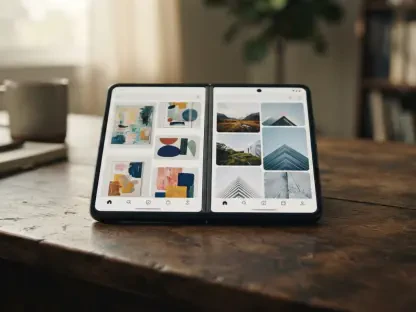
The journey toward category-blurring devices began in earnest with early foldable models that introduced a basic “two-in-one” utility, functioning as a standard smartphone when closed and a small tablet when opened. However, since the middle of the decade, the industry has progressed toward even more ambitious designs, such as tri-fold devices that extend to over 10 inches. This evolution effectively offers the screen real estate of a professional-grade tablet within a pocketable frame, pushing the boundaries of what consumers expect from mobile hardware. The demand for these devices is driven by a need for more space to manage complex workflows without the bulk of a traditional laptop. Manufacturers are no longer just making screens bigger; they are making them more adaptable, allowing a single piece of hardware to transition from a communication tool to a creative workstation in a matter of seconds. This physical versatility is the cornerstone of the new hardware era, where the folding mechanism is not just a gimmick but a necessary functional component.
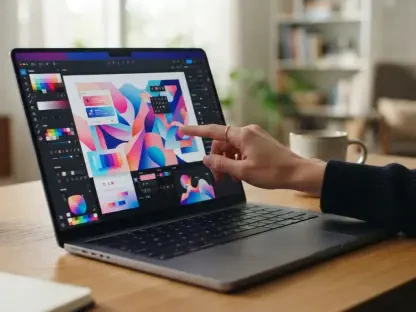
This convergence is a two-way street where smartphones are expanding their footprint to challenge tablets, while tablets are diversifying to challenge both phones and laptops. The laptop market is responding in kind with touch-enabled screens and detachable designs, with even Apple breaking its long-standing tradition by introducing touch-sensitive OLED screens to the MacBook Pro lineup. The emergence of foldable screen laptops represents the pinnacle of this trend, offering a massive workspace that can fold into a compact form to bridge the gap between traditional typing and modern touch interfaces. These devices are increasingly equipped with high-performance silicon that matches the capabilities of traditional desktops, ensuring that the folding form factor does not come at the cost of processing power. As these hybrid designs become more robust and affordable, they are beginning to dominate the premium segment of the market, offering a glimpse into a future where a user’s primary computer is defined by its ability to change shape rather than its fixed dimensions.
Consumer Dynamics: The Quest for Task Continuity
The primary driver behind this technological convergence is a fundamental change in how people interact with their devices in their daily lives. In previous decades, digital life was fragmented, with phones used for communication and laptops reserved for productivity. In the contemporary era of 2026, users prioritize “task continuity,” demanding a seamless transition between various digital environments. The modern professional expects to start a document on a smartphone during a morning commute and finalize it on a large-screen foldable during a flight without any friction or the need to manually sync files. This behavioral shift has forced hardware designers to stop thinking about devices as isolated products and start viewing them as components of a continuous digital experience. When a device can physically adapt its size to the task at hand, it removes the mental and physical barriers that once defined mobile work, making productivity truly location-independent.
Manufacturers have recognized that the difficulty of transferring files across different operating systems or screen sizes is a significant pain point for the modern workforce. Consequently, the industry has pivoted toward features like multi-screen collaboration and cross-device file transfers that feel instantaneous. The ultimate solution for many consumers is the “all-in-one” device—a single piece of hardware that can adapt to multiple scenarios with ease. The desire for hardware that serves as a high-definition cinema, a powerful workstation, and a primary communication hub is what drives the market toward these hybrid foldable designs. This consolidation of hardware reflects a broader desire for simplicity in an increasingly complex digital world. By reducing the number of devices a person needs to carry, manufacturers are offering not just a product, but a more streamlined lifestyle where the focus remains on the output rather than the tool being used.
Artificial Intelligence: Redefining Interaction Logic
The rise of Artificial Intelligence has further accelerated the blurring of device boundaries by altering the logic of human-computer interaction in fundamental ways. AI-driven tasks, such as generative content creation and smart object selection, often favor touch and stylus inputs over the traditional mouse-and-keyboard setup. For instance, circling an object for an AI edit is intuitive on a touch screen but can feel cumbersome using a traditional laptop touchpad, making tablets and foldables more attractive for AI-centric workflows. This shift in input preference is forcing a redesign of hardware interfaces to prioritize direct manipulation of digital elements. As AI models become more integrated into the core of operating systems, the need for expansive, tactile surfaces grows, as these are the primary canvases for generative creativity. The keyboard, while still useful, is no longer the undisputed king of input, ceding ground to more naturalistic methods that feel like an extension of the human hand.
This shift has forced manufacturers to experiment with dual-screen designs and touch-integrated interfaces to keep pace with the intuitive nature of mobile operating systems. As AI becomes the central pillar of the user experience, hardware must evolve to support the most efficient way to interact with these intelligent systems. This often means adopting the tactile flexibility of mobile devices, further pushing traditional laptops toward a hybridized future where the screen is the primary point of engagement. In 2026, we are seeing the emergence of “AI-first” hardware, where the physical buttons and ports are minimized in favor of a clean, expansive folding screen that serves as a dynamic interface. These devices use internal sensors to detect how they are being held, automatically adjusting the UI to facilitate AI shortcuts and voice commands. This symbiosis between advanced software and flexible hardware is creating a new paradigm where the device feels more like an intelligent assistant than a passive tool.
Software Hurdles: Bridging the Ecosystem Divide
Despite the rapid advancements in hardware, the underlying software ecosystem remains the most significant barrier to the total disappearance of device boundaries. Hardware can fold and expand, but if the software is not optimized for these physical transitions, the user experience remains fractured and frustrating. Operating systems built on traditional pointer-based paradigms often fail when applied to touch screens because the interface was never designed for the broadness of a human finger. This “Windows Touch Gap” or similar issues in other legacy systems create a situation where high-end hardware feels limited by its own instructions. Solving this requires a complete overhaul of UI design, moving away from tiny menus and icons toward larger, more fluid interactive elements that can scale instantly as a screen unfolds. Without this software agility, the hardware is merely a showcase for a technology that hasn’t yet found its voice.
Furthermore, many mobile applications lack the necessary scaling logic for large foldable screens, resulting in stretched interfaces that fail to use the extra space effectively. Even in mature ecosystems, third-party developers often lack the incentive to optimize their apps for niche form factors, leading to a fragmented experience where only a handful of applications truly feel native to a foldable device. This highlights the need for a unified software approach that matches the versatility of the hardware. The goal is to create an environment where an app can exist in three different states: a compact phone view, a medium tablet layout, and a full desktop-style interface. Achieving this level of adaptability requires massive cooperation between hardware vendors and software developers. Until a critical mass of “foldable-native” applications is reached, these devices will continue to face criticism for being overpowered hardware running underpowered software that fails to justify the premium price tag.
Strategic Parity: Apple vs. Emerging Rivals
Apple’s strength in this evolving market lies in its unified hardware architecture, which has been meticulously refined over several years. By transitioning its laptops, tablets, and phones to self-developed M-series and A-series chips, the company has created a foundation where software can theoretically run across any of its devices with minimal friction. This architectural synergy ensures that when the foldable tablet finally reaches consumers, the transition for developers and users will be significantly smoother than that of its competitors who rely on fragmented operating systems. The ability to run iPad apps natively on a Mac and vice versa is not just a feature; it is the blueprint for a future where the distinction between a mobile and desktop app disappears entirely. This gives the company a massive head start in creating a cohesive user experience that feels intentional rather than forced.
On the other hand, competitors like Huawei have pioneered strategies that allow developers to create applications that automatically adjust their layout based on the device screen size. This approach allows a single code base to bridge the gap between a smartwatch, a smartphone, and a foldable laptop, ensuring that the user experience remains consistent across the entire product ecosystem. The success of these competing strategies depends on the growth of their respective developer communities and their ability to reach a critical mass of available, optimized applications. While one company relies on its proprietary hardware-software vertical integration, the other is pushing for a more flexible, cross-platform standard that can adapt to any screen size. Both paths are aiming for the same destination: a unified computing environment where the specific piece of hardware in your hand is less important than the ecosystem you are logged into.
Future Considerations: The Path to Market Maturity
The analysis of the current tech landscape identified that while boundaries are narrowing, several physical and practical constraints still prevent one device from becoming the absolute master of all categories. Research showed that laptops continue to possess superior heat dissipation and larger batteries, allowing for high-performance tasks like professional video editing that current thin-profile foldables cannot yet sustain without thermal throttling. The investigation into ergonomics also confirmed that physical keyboards remain a necessity for serious productivity, as virtual alternatives on foldable screens lacked the tactile feedback required for long-form data entry. These findings indicated that the industry is not heading toward a single “super-device,” but rather toward a more integrated family of tools that share a common digital soul while maintaining distinct physical strengths for specific professional scenarios.
The study of market trends confirmed that the most effective solution for the next stage of development involved a hybrid approach to both hardware and software. It was concluded that manufacturers who prioritized a “coexistence” strategy, where foldables handle the vast majority of daily tasks while leaving the extreme performance to specialized workstations, saw the highest levels of user satisfaction. Moving forward, the industry must focus on improving the durability of flexible materials and refining the thermal management of ultra-thin frames to close the performance gap. Actionable insights suggest that the next major milestone will be the standardization of “liquid” interfaces that flow across screens of any size without manual adjustment. By leaning into this hybridized future, companies will not only solve the problem of device fragmentation but also provide users with a more intuitive and powerful way to manage their digital lives in a world that no longer respects traditional hardware borders.