
Modern fitness enthusiasts frequently find themselves caught between the allure of seamless digital integration and the gritty reality of physical exertion in a high-stakes training environment where every micro-adjustment counts toward long-term health. While the current version of Siri, powered by the latest Apple Intelligence framework, offers impressive integration with biometric sensors, it remains a reactive tool rather than a proactive guide. The promise of a virtual coach living in an earbud is undeniably attractive, yet the technology often stumbles when confronted with the idiosyncratic nature of human movement. A professional personal trainer brings a wealth of intuition and observational depth that currently eludes even the most sophisticated Large Language Models. Siri can certainly recite a workout plan or track calories burned with surgical precision, but it lacks the contextual awareness to understand why an athlete might be struggling with a specific movement pattern. This gap between data collection and meaningful intervention defines the current limits of coaching.
The Constraints of Computer Vision and Spatial Awareness
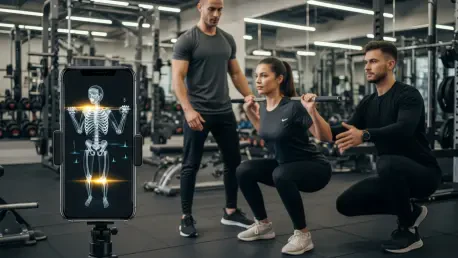
Spatial awareness remains one of the most significant hurdles for digital assistants attempting to monitor complex compound movements like the snatch or the overhead squat. Even when paired with advanced camera systems on an iPhone or through the vision sensors on wearable peripherals, Siri struggles to provide the granular, real-time feedback required to prevent injury during heavy lifting. A human trainer utilizes three-dimensional perspective and years of experience to spot the subtle inward collapse of a knee or the slight rounding of the lumbar spine before the weight even leaves the floor. In contrast, the current algorithmic approach relies on pre-defined skeletal maps that often fail to account for individual anatomical variations such as limb length or joint mobility. This results in generic cues that might actually be counterproductive for certain body types. Until computer vision can reliably process the fluid dynamics of a high-speed athletic maneuver without latency, the safety of the user remains at risk.
Beyond the purely physical aspects of form correction, the nuances of verbal communication in a gym setting require a level of social intelligence that Siri has yet to master. A personal trainer knows exactly when to provide a firm correction and when to offer a moment of silence to allow an athlete to find their own rhythm. Siri’s current vocal processing is designed for efficiency and clarity, which often translates to a robotic or repetitive tone during a high-intensity session. This repetition can lead to alert fatigue, where the user begins to tune out the voice entirely, negating the purpose of having a digital coach in the first place. Moreover, the lack of real-world situational awareness means that Siri cannot account for environmental factors, such as a crowded gym floor or a malfunctioning piece of equipment. A human coach manages the entire ecosystem of the workout, adjusting the plan on the fly to ensure that the session remains productive despite any external interruptions.
The Integration of Human Expertise and Digital Precision: Future Directions
The evolution of digital fitness tools necessitated a shift away from the idea of total replacement toward a model of enhanced collaboration between machines and humans. Researchers and developers discovered that the most effective use of Siri involved delegating the heavy lifting of data logging and session timing to the AI while leaving the critical thinking to the professional. This realization led to the creation of hybrid platforms where trainers utilized Siri’s biometric summaries to make more informed decisions about their clients’ programming. Instead of competing with the digital assistant, top-tier coaches embraced it as a sophisticated administrative tool that freed them to focus entirely on the athlete’s movement quality and mental state. The industry recognized that while algorithms improved at a staggering rate, the intrinsic human need for connection and specialized observation remained a constant. Therefore, the successful path forward centered on integrating high-tech data with high-touch guidance.
Ultimately, the realization that technology served as a supplement rather than a substitute allowed the fitness community to establish a more sustainable approach to physical training. Individuals who previously relied solely on digital prompts found that their progress accelerated once they reintroduced the human element into their routines. This shift highlighted the fact that while Siri could process millions of data points per second, it could not replicate the shared experience of overcoming a difficult physical challenge alongside a supportive mentor. The hardware became more unobtrusive, and the software became more intuitive, but the core of the training experience remained rooted in the interpersonal exchange of knowledge and encouragement. By the time these systems reached their current maturity, the industry had moved past the novelty of AI to focus on the practical benefits of a balanced methodology. The lessons learned during this period of rapid adoption ensured that user health remained the priority.