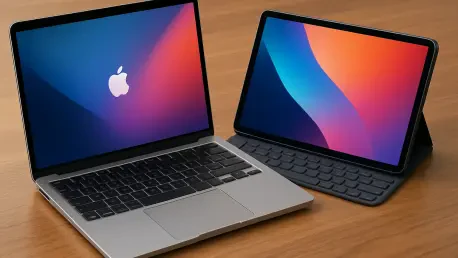

The release of the MacBook Neo has fundamentally altered the landscape of consumer electronics by introducing a high-performance macOS laptop at a price point that was previously reserved for tablets. For years, the barrier to entry for the Apple computing ecosystem remained high, forcing budget-conscious users toward the iPad as their primary productivity tool. This new hardware release changes the calculus entirely, offering a full desktop operating system, a permanent keyboard, and the familiar clamshell form factor for just under five hundred dollars. By shifting the entry-level focus away from iPadOS and back toward macOS, Apple is effectively reorganizing its entire product ladder to prioritize software versatility for the masses. This strategic pivot suggests that the company is no longer content with the iPad being a “lite” laptop replacement; instead, it is positioning the Mac as the universal starting point for any student or professional entering the digital workspace.
The Economic Impact of the MacBook Neo
Disrupting the Entry-Level Market: A Strategic Pricing Shift
The arrival of a four-hundred-and-ninety-nine-dollar MacBook represents a radical departure from the pricing structures that have defined the Cupertino tech giant for over a decade. By targeting the education and entry-level segments so aggressively, Apple is directly challenging the dominance of low-cost Windows laptops and Chromebooks which have traditionally owned the sub-six-hundred-dollar market. The MacBook Neo does not feel like a budget device, as it retains the premium aluminum unibody construction and the high-resolution Retina display that users expect from the brand. This move effectively eliminates the financial friction that often prevented iPhone users from completing their ecosystem with a Mac. Furthermore, the inclusion of the A18 Pro chip—silicon originally designed for the most powerful smartphones—allows for incredible energy efficiency and silent, fanless operation without the massive overhead costs of the M-series processors used in the Pro and Air lines.
This shift in market strategy creates a new baseline for what a “starter” computer should be in the modern era. While competitors often rely on plastic chassis and mediocre screens to hit these low price points, the Neo leverages Apple’s massive supply chain and recycled iPhone silicon to offer a superior physical product. The long-term goal appears to be the expansion of the user base; by getting more people onto macOS earlier in their lives, the company ensures a steady stream of customers for its high-margin services and future hardware upgrades. However, this accessibility comes with intentional constraints designed to keep the product tiers distinct. By limiting the base model to eight gigabytes of memory and standard storage speeds, Apple ensures that professional video editors and developers still have a reason to invest in the more expensive MacBook Pro or Air models, thereby maintaining its profit margins while simultaneously capturing the high-volume low-end market.
Hardware Compromises: Balancing Premium Design with Production Costs
Engineering a five-hundred-dollar laptop requires a sophisticated understanding of where to spend money and where to save it without damaging the brand’s reputation. To achieve the Neo’s price point, the design team opted for a simplified internal architecture that moves away from the modular complexity of the higher-end machines. The most notable compromise is the introduction of a more economical haptic trackpad, which provides a similar feel to the Force Touch models found on the MacBook Pro but uses fewer actuators and a less expensive glass composite. This reduction in component cost is mirrored in the port selection, which is limited to two USB-C ports, forcing users who need more connectivity to rely on external hubs. These decisions are not merely cost-cutting measures; they are strategic design choices that define the Neo as a focused productivity tool for writing, browsing, and light media consumption rather than a do-it-all workstation.
Despite these limitations, the hardware experience remains surprisingly cohesive because the core interaction points—the keyboard and the display—are not neglected. The use of the standard Magic Keyboard ensures that typing remains a premium experience, which is the primary concern for the students and writers who represent the Neo’s target demographic. The storage, while capped at five hundred and twelve gigabytes, utilizes a single-chip NAND configuration that is sufficient for general office work but noticeably slower during massive file transfers compared to the dual-chip setups in the M-series MacBooks. This careful balancing act ensures that the Neo occupies a unique space: it is affordable enough to be an impulse buy or a bulk purchase for a school district, yet it remains sufficiently differentiated from the MacBook Air to prevent significant cannibalization of Apple’s mid-tier revenue. The result is a device that feels like a deliberate tool rather than a stripped-down version of something better.
The Existential Crisis of the iPad
Navigating Cannibalization: The Decline of the iPad Pro as a Laptop Replacement
The existence of a five-hundred-dollar Mac creates a significant problem for the iPad lineup, particularly for the iPad Air and Pro models that have spent years attempting to masquerade as laptops. When a consumer looks at the total cost of ownership, an iPad Air paired with a Magic Keyboard often reaches a price point well over eight hundred dollars, which is significantly higher than the cost of a MacBook Neo. For a user whose primary tasks involve emailing, word processing, and web research, the Neo provides a superior experience with a better file system and more robust window management at a much lower price. This price-to-performance gap makes it increasingly difficult to justify the iPad as a general-purpose productivity machine. The “tablet-first” approach that Apple pushed for the last few years is now being undermined by its own hardware strategy, leaving the iPad in a state of professional limbo.
The market data suggests that users are beginning to realize that adding a heavy keyboard case to a thin tablet often results in a device that is heavier and less capable than a dedicated laptop. With the MacBook Neo handling the “affordable computer” role, the iPad’s identity as a productivity tool is being squeezed from both ends of the market. On one side, the Neo offers a better typing and multitasking environment for less money; on the other side, the iPhone is becoming large and powerful enough to handle quick mobile tasks. This leaves the iPad in a position where it must redefine its purpose or risk becoming a niche device for media consumption alone. The consensus among industry analysts is that the iPad cannot continue to exist as a “middle-ground” device. It must either become a specialized tool for creators or accept a diminished role as a secondary screen within the broader Apple ecosystem.
The Need for iPadOS Evolution: Shifting Toward a Creative Pivot
To ensure the survival and relevance of the tablet category, Apple must stop trying to make iPadOS more like macOS and instead lean into the unique capabilities of the touchscreen and the Apple Pencil. The current software strategy, which introduced features like Stage Manager to improve windowing, has arguably made the iPad more confusing without making it a better computer. With the MacBook Neo now occupying the budget laptop space, there is no longer a need for the iPad to be a “Mac Lite.” Instead, the software should evolve to prioritize distraction-free creativity, digital illustration, and precision note-taking—areas where a stylus on glass is objectively superior to a mouse and keyboard. This shift would transform the iPad from a compromised laptop into a specialized creative powerhouse that appeals to artists, designers, and students who value tactile interaction over traditional desktop metaphors.
This evolution requires a fundamental rethink of the iPadOS interface, moving away from the grid of icons and toward a workspace that feels like a digital canvas. Imagine an operating system where the primary input is the Pencil and the secondary input is touch, with the keyboard relegated to a purely supportive role for data entry. By focusing on low-latency ink, advanced pressure sensitivity, and unique haptic feedback through the screen, Apple can create a specialized experience that the MacBook Neo could never replicate. This would effectively split the market into two clear paths: the Mac for those who need to manage data and windows, and the iPad for those who need to create and manipulate content directly with their hands. By leaning into “tablet-ness,” Apple can save the iPad from the shadow of the Mac and foster a new generation of creators who view the tablet as their most essential and versatile creative instrument.
Future Integration and Category Distinction
Addressing Touchscreen Conflicts: The Coming Hardware Convergence
The anticipated introduction of a touchscreen MacBook Pro adds another layer of complexity to Apple’s product hierarchy, potentially further eroding the iPad’s unique selling proposition. If the Mac gains a touch-sensitive display, the physical interaction model that once defined the tablet will become a shared feature, forcing a radical reconsideration of why a user would choose an iPad over a touch-enabled Mac. This convergence suggests that the distinction between the two product lines can no longer be based solely on hardware capabilities like “touch” or “stylus support.” Instead, the differentiation must come from the philosophical approach to the user interface. A touchscreen Mac would likely retain the window-based macOS structure, using touch for quick interactions or scrolling, whereas the iPad must remain a focused, full-screen environment that encourages deep work without the clutter of a desktop.
This looming hardware conflict necessitates a strategic decision regarding the iPad’s role as either a standalone device or a sophisticated accessory to the Mac. In a world where every Apple device has a screen and many have touch capabilities, the iPad could find a new lease on life as the ultimate input peripheral. Through technologies like Sidecar and Universal Control, the iPad can already act as a secondary monitor or a drawing tablet for the Mac. Future iterations could deepen this integration, allowing the iPad to act as a dedicated “palette” or “control center” for professional applications running on macOS. However, for the iPad to remain a viable standalone product, it must offer something more than just a second screen. It must provide a software experience that is so optimized for the digital canvas that switching to a mouse and keyboard feels like a step backward for specific creative workflows.
The Opportunity in Disruption: Refining the Modern Ecosystem
The MacBook Neo has served as a catalyst for a necessary reorganization of the Apple ecosystem, clearing the path for both the Mac and the iPad to excel in their respective domains. By providing a legitimate macOS experience at an accessible price, the company has relieved the iPad of the burden of being the “affordable” alternative for those who cannot afford a “real” computer. This freedom allows the engineering teams to stop making compromises that diluted both platforms, such as trying to force desktop windowing onto a ten-inch screen or keeping Mac prices artificially high. The result is a more honest product lineup where the consumer’s choice is based on how they want to work rather than how much they can spend. The Mac handles the heavy lifting of traditional computing, while the iPad matures into the premier destination for digital artistry and fluid, touch-first interaction.
This transition was ultimately a successful exercise in market segmentation that prioritized long-term ecosystem health over short-term hardware protectionism. Moving forward, the focus shifted to expanding the capabilities of the Apple Pencil and developing specialized iPadOS modules for high-end creative suites that utilize the tablet’s unique form factor. The MacBook Neo successfully captured the student and general-purpose markets, while the iPad reclaimed its status as an innovative, boundary-pushing device for those who find the traditional computer too rigid. By clearly defining these roles, the strategy ensured that every device in the lineup had a distinct purpose and a clear path for future development. This holistic approach fostered a new era of digital productivity where the choice of hardware is determined by the creative intent of the user, ensuring that both the MacBook and the iPad remained essential tools in the modern technological landscape.