
Introduction
Navigating the complexities of modern device management often reveals a startling paradox where a professional IT administrator overseeing thousands of workstations has more control and less stress than a parent trying to keep four iPhones updated within a single household. While enterprise systems have evolved toward seamless automation and centralized oversight, the domestic digital environment remains a fragmented landscape of manual checks and individual user configurations. This article investigates the structural and philosophical reasons behind this discrepancy, explaining why the tools available to families often fall short of the robust standards found in the business world.
The primary objective is to answer pressing questions about the limitations of consumer-grade fleet management and to offer insights into how technical barriers impact everyday digital hygiene. Readers can expect an exploration of the current software landscape, including the friction between individual privacy and administrative efficiency. By examining the existing frameworks like Family Sharing and Mobile Device Management, this discussion clarifies the specific challenges that make family IT administration a unique and often frustrating responsibility.
Key Questions or Key Topics Section
Why Is Centralized Software Management So Difficult for Households?
Maintaining a unified software version across multiple devices is a cornerstone of digital security, yet it remains an elusive goal for most family administrators. In a corporate setting, an IT department can mandate that every laptop and smartphone install a critical security patch by a specific deadline. Within a home, however, the administrator lacks the visibility to even know if a spouse or child has initiated an update. The reliance on individual user cooperation creates a vulnerability gap where one unpatched device can compromise the security or compatibility of the entire family group.
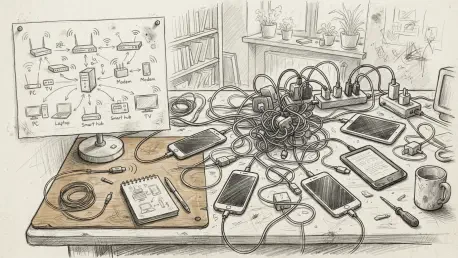
While Apple provides settings for automatic downloads and overnight installations, these must be enabled manually on each piece of hardware. Even when these features are active, they are easily bypassed by a user who cancels a prompt to check social media or play a game. Consequently, the family lead must physically handle every device to verify its status, a task that becomes increasingly burdensome as the number of iPads, Macs, and iPhones in a household grows. The absence of a central dashboard to monitor these versions represents a significant hurdle in modern home management.
Why Are Professional Management Tools Often Impractical for Home Use?
Enterprise-grade solutions like Apple Business Essentials or third-party platforms such as Jamf are designed to solve these exact problems, but they are rarely suitable for a domestic context. Apple Business requires formal registration as a commercial entity and the use of managed accounts, which can strip away the personal features that families value. Furthermore, the cost associated with professional Mobile Device Management services can escalate quickly. While some services offer a free tier for a handful of devices, the price per unit thereafter makes managing an extended family fleet a costly endeavor that most households cannot justify.
Other free tools like Apple Configurator offer powerful supervision capabilities, including the ability to block specific apps or enforce web filtering. However, these tools often require a physical tether to a Mac and frequently involve wiping the device during the initial configuration process. This creates a high barrier to entry for the average parent who simply wants to ensure their children are running the latest security patches. The labor-intensive nature of these professional tools often outweighs the benefits, leaving families stuck between basic consumer settings and overly complex corporate software.
How Do Privacy Protections Conflict With Fleet Management Efficiency?
The tension between administrative control and individual privacy is perhaps the greatest philosophical obstacle in family IT. Apple builds its ecosystem on the principle of the individual user, treating every person within a Family Sharing group as an independent entity with a right to digital agency. This model ensures that no single person can remotely access deep system logs or force significant OS changes on another person’s personal device without their consent. While this protects children and spouses from potential overreach or monitoring, it simultaneously prevents the administrator from performing necessary maintenance tasks.
If a central administrator were given the power to force software updates, they would also theoretically have the power to disrupt the user experience or gain insights into usage patterns that violate privacy expectations. This binary choice between absolute individual control and centralized management reflects a commitment to security that prioritizes the user over the network. Although this approach mitigates the risk of domestic digital abuse, it leaves the designated family IT lead with the thankless job of chasing down family members to perform basic maintenance.
What Role Does the Declarative Device Management Framework Play?
The technical infrastructure for better family management already exists in the form of Declarative Device Management, though it remains restricted to the enterprise sector. This framework allows devices to be more autonomous, responding to specific triggers and deadlines set by an administrator. For example, a business can set a hard deadline for a security update, and the device will progressively increase the urgency of its notifications until the task is completed. These system-level hooks are far more effective than a simple text message or a verbal reminder from a parent.
Expanding these capabilities to the Family Sharing environment could potentially offer a middle ground, such as a pester button that allows an admin to send a high-priority system alert to a family member’s screen. Such a feature would respect the user’s agency by not forcing the update immediately while ensuring the notification cannot be ignored as easily as a standard message. Until such system-level tools are migrated from the corporate world to the consumer space, the domestic administrator will continue to operate with a significant disadvantage compared to their professional counterparts.
Summary or Recap
The difficulties inherent in managing a family fleet stem from a combination of technical limitations, financial barriers, and a strict adherence to user privacy. Corporate IT administrators benefit from a suite of tools that allow for visibility and mandatory compliance, whereas family leads are forced to rely on manual intervention and the cooperation of individual users. While professional management suites exist, their complexity and cost make them ill-suited for the average home. The current ecosystem prioritizes the autonomy of the individual, which, while beneficial for privacy, creates a significant workload for those responsible for maintaining digital security within the household. Improving this experience would require a shift toward more integrated oversight within consumer platforms without compromising the fundamental rights of the users.
Conclusion or Final Thoughts
The evolution of device management from 2026 and beyond likely involved a deeper integration of professional-grade oversight into the consumer experience. The realization that domestic security is just as critical as corporate infrastructure pushed developers to consider more nuanced tools for the household administrator. Those who took the time to set up basic automation and maintain open communication with family members found the most success in navigating these challenges. Ultimately, the burden of the family admin was lightened not just by software, but by a collective understanding of digital responsibility within the home. Moving forward, the industry addressed the need for better visibility, ensuring that the safety of the family network no longer relied solely on the manual labor of a single dedicated individual.