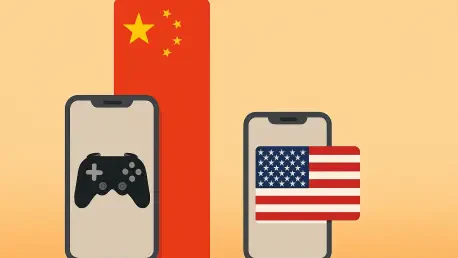

The mobile gaming sector has officially surpassed both Hollywood and music streaming as the primary vehicle for global cultural soft power. This tectonic shift in the entertainment landscape is most visible in the rapid displacement of the United States by China as the preeminent force in mobile development and publishing. For decades, the digital frontier was defined by the creative output of Silicon Valley and the strategic vision of American tech giants, who introduced the world to era-defining titles like Temple Run and Pokemon Go. However, by mid-2026, the statistical reality has become impossible to ignore: China has successfully captured 40% of the global market share, while the United States has seen its influence plummet to a mere 16.5%. This transition is not merely a regional fluctuation but a fundamental restructuring of how games are conceived, financed, and consumed globally. The erosion of American dominance signals a broader transformation in digital hegemony, as Chinese firms leverage superior production speed and aggressive monetization strategies to redefine industry standards. As the center of gravity moves East, the American industry faces an existential crisis, grappling with high development costs and a perceived stagnation in creative risk-taking that has allowed its primary competitor to seize control of the world’s most lucrative interactive medium.
Economic Disparities and Production Models
The Impact: Operating Costs and Labor Efficiency
A primary driver of the Chinese ascent is the insurmountable gap in development costs and labor efficiency that currently defines the international market. While American developers command high average salaries, often exceeding $142,000 in major tech hubs, studios in Chinese centers like Shanghai operate with significantly lower overhead while maintaining much larger teams. This financial advantage allows Chinese firms to sustain faster development cycles and greater production scales, effectively overwhelming Western competitors who are bogged down by administrative costs and talent scarcity. In the current environment, a Chinese studio can often deploy three times the headcount for the same budget as a mid-sized firm in California. As a result, many American startups are struggling to maintain their footing, with some even relocating operations to regions like Latin America or Eastern Europe to remain financially viable. This “brain drain” from the domestic American market has created a vacuum where Chinese expertise now sets the pace for technical execution and content updates, leaving U.S. firms in a perpetual state of catch-up.
Sophisticated Monetization: The Psychologist-Economist Approach
Chinese developers have revolutionized how games generate revenue by blending rigorous economic strategy with sophisticated psychological engagement. Top-tier Chinese titles now generate significantly higher quarterly revenue per user in the U.S. market compared to domestic American games, with some reports indicating a staggering $47 per active user compared to a modest $8 for American-made titles. By mastering intricate systems such as “loot boxes” and high-engagement social mechanics, companies like MiHoYo and Tencent have created massive financial juggernauts that operate more like digital economies than simple entertainment products. This “psychologist-economist” approach to game design has allowed Chinese titles to reach lifetime grosses that currently remain unmatched by any American mobile competitors. These developers utilize real-time data to adjust difficulty curves and reward cycles, ensuring that player retention remains high while maximizing the propensity for in-app purchases. This level of mathematical precision in monetization has transformed the mobile experience into a high-yield revenue engine that American studios, often focused on more traditional gameplay loops, have found difficult to replicate without alienating their core audiences.
Cultural Influence and Creative Innovation
The Shift: Global Soft Power Dynamics
Mobile gaming has evolved into a more lucrative and influential medium than traditional cinema, making it a critical tool for cultural soft power in the mid-2020s. As Chinese titles dominate the digital diets of younger generations, the aesthetic and narrative preferences of players are shifting away from Western norms. The global popularity of stylized fantasy and anime-inspired characters from Chinese studios is increasingly replacing traditional American cultural hegemony in the digital space. These characters and stories now dominate social media feeds and online communities, creating a new shared cultural language among Gen Z and Gen Alpha. By successfully catering to diverse demographics, including the rapidly growing and historically underserved market for female gamers through titles like Love and Deepspace, China is expanding its cultural footprint at the direct expense of the United States. This shift suggests that the narratives shaping the world’s youth are no longer being written in Los Angeles or Seattle, but are instead being crafted in the creative hubs of Shanghai and Shenzhen, where the fusion of traditional folklore and modern digital aesthetics has struck a chord with a global audience.
The Western Crisis: Stagnation in Innovation
Industry leaders have pointed to a lack of radical innovation among Western developers as a key reason for their steady decline over the past few years. In the current market, only a tiny fraction of new billion-dollar gaming hits originated in the West, with the overwhelming majority emerging from Asian studios that have embraced a culture of constant iteration. While Chinese developers were once dismissed by critics as mere imitators, they have since used their massive domestic player base of 680 million gamers as a high-velocity testing ground to refine high-quality, polished products before they ever reach international shores. This allows them to export games that are more mechanically sound, visually impressive, and fundamentally more addictive than those produced by slower-moving Western firms. The result is a market where Western studios often rely on aging intellectual properties and sequels, while Chinese firms are launching expansive, open-world experiences on mobile devices that rival the quality of traditional console titles. This innovation gap has forced a realization among Western executives that the old model of mobile development is no longer sufficient to compete with the sheer creative momentum coming from the East.
Structural Integration and Market Barriers
Strategic Irony: Dependency on Chinese Expertise
The dominance of China is further evidenced by the fact that major American gaming giants now frequently outsource their flagship mobile projects to Chinese studios to ensure commercial success. High-profile releases from companies like Microsoft’s Activision Blizzard and Take-Two’s Zynga are often developed by Chinese partners who possess the specialized technical knowledge required to optimize high-fidelity games for mobile hardware. This creates a strategic irony where the United States gaming industry is increasingly dependent on its primary competitor to maintain a presence in the mobile market it once controlled. As the number of top-performing American-made titles continues to fall—dropping from 22 to 13 in the global top 100 over the last decade—the reliance on Chinese development cycles has become a structural necessity for Western corporate profitability. This integration means that even when a game carries an American brand, the underlying technology, monetization logic, and artistic execution are often products of Chinese ingenuity. This trend has raised concerns about the long-term viability of domestic American development talent, as the foundational skills of the industry are increasingly concentrated within foreign borders.
Regulatory Imbalance: Geopolitical Friction in Gaming
The competitive landscape is complicated by a lopsided regulatory environment that significantly favors Chinese expansion while stifling American growth. While the American market remains largely open to international developers and offers a relatively low barrier to entry for Chinese apps, U.S. firms face extreme difficulty entering the Chinese market due to strict government approval processes and protectionist policies. In recent periods, the Chinese government approved over 1,100 domestic games while allowing only a handful of international titles to enter the country, effectively creating a one-way street for economic growth. This imbalance allows Chinese companies to tap into American revenue streams to fund their global ambitions while simultaneously boxing out Western competition from China’s own $41 billion domestic market. This situation has fueled significant geopolitical tensions and prompted national security investigations into the ties between major gaming conglomerates and foreign military or intelligence services. For American firms, the inability to access the world’s largest pool of gamers represents a massive missed opportunity that has hampered their ability to scale and reinvest in the same way their Chinese counterparts have.
Future Trends and Market Evolution
Diversification: The Move Toward Web Platforms
In response to the high fees and strict controls enforced by dominant app stores, many developers are exploring alternative distribution methods, such as mini-games integrated directly into social media platforms. While this trend began in China with the massive success of “mini-programs” on platforms like WeChat and Douyin, American developers are now attempting to adapt by moving toward the open web and alternative monetization models to bypass the “Apple tax.” This shift represents an attempt to decentralize the mobile gaming economy and reclaim margins that have been eroded by platform holders. However, even as other international hubs in Singapore and Turkey gain ground and offer new avenues for competition, many of these successful entities remain inextricably linked to Chinese investment and infrastructure. The move toward web-based platforms may offer a temporary reprieve for Western developers, but the underlying challenge remains the same: the technical and economic blueprints for these new platforms are often being pioneered in the East, leaving Western firms to once again follow a path already cleared by their competitors.
Strategic Adaptation: Shaping the Future of Development
For many industry veterans, the decline of the American mobile sector represented more than just a loss of revenue; it signaled the end of an era where Silicon Valley dictated the future of digital creativity. To reclaim their standing, Western firms were encouraged to pivot toward high-fidelity, cross-platform experiences that leveraged their remaining strengths in narrative depth and brand heritage. The findings suggested that unless U.S. developers reconciled high operating costs with the need for rapid innovation, the sector would continue to drift further into China’s sphere of influence. Moving forward, the most viable path involved creating leaner, more agile studios that adopted the “testing ground” philosophy seen in successful Asian markets. The industry’s center of gravity shifted toward the East, leaving American firms to redefine their role in a landscape they once pioneered. By embracing more aggressive monetization ethics and investing in large-scale production hubs in lower-cost regions, some Western companies sought to stabilize their market share. Ultimately, the successful players were those who recognized that the old hierarchies had permanently dissolved, requiring a complete overhaul of how games were built, marketed, and maintained in a truly globalized digital economy.