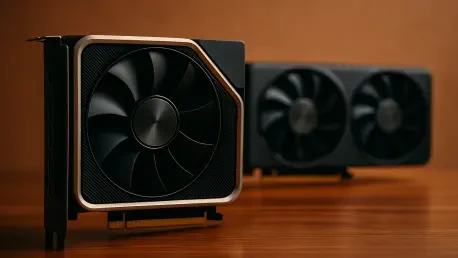

Spending thousands on a top-tier graphics card today often feels like a sound investment until the mid-range silicon of next year renders that massive expenditure obsolete within months. For decades, the “future-proofing” philosophy has convinced PC builders that overspending today saves money tomorrow, yet the reality is often the exact opposite. While the “fear of missing out” drives enthusiasts to buy flagship components at launch, the rapid pace of silicon innovation ensures that even the most expensive rigs face an early retirement. This mindset frequently traps consumers in a cycle of diminishing returns, where the price paid for theoretical longevity never actually materializes as real-world value.
The concept of future-proofing relies on the assumption that software demands will scale linearly with hardware prices. However, the software market rarely keeps pace with the most expensive graphics units, meaning much of that paid-for power sits idle for the first half of the component’s lifespan. By the time games actually require that level of performance, a newer, more efficient mid-range card often provides the same result, along with newer features that the old flagship lacks. Consequently, the pursuit of the “bleeding edge” usually results in a bleeding wallet rather than a more durable machine.
The Economic Realities of the Hardware Rat Race
Understanding the “future-proof” fallacy requires a look at how the tech industry actually moves. Unlike a high-quality piece of furniture or a car, computer hardware is subject to a volatile cycle where technical innovation frequently outpaces consumer buying habits. With global supply chain issues causing price spikes and new software features—like AI-driven upscaling or frame generation—being locked to newer architectures, the top-tier hardware of today is often more about branding than lasting utility. This creates a scenario where users pay a massive premium for performance headroom that they may never actually utilize before the component becomes obsolete.
The depreciation rate of a flagship motherboard or processor is among the highest in any consumer technology category. Within two release cycles, the secondary market value of these “future-proof” parts typically plummets, proving that high entry costs rarely translate into long-term financial stability for the user. Moreover, the hidden costs of running high-end hardware, such as increased electricity consumption and the need for more expensive power supplies, further erode any perceived savings. The economic reality is that hardware is a consumable good, not a static investment, and treating it as the latter leads to significant financial inefficiency.
Breaking Down the Value Gap in Modern Components
The performance delta between high-end and mid-range hardware is narrowing, making the price jump for flagship parts harder to justify. In the graphics market, a flagship card might offer record-breaking benchmarks, but by the time modern games truly require that level of power, newer mid-range cards often provide better efficiency and specialized features like improved ray tracing. Similarly, the trend toward high-core-count processors often results in “over-speccing,” where users pay for processing power that remains idle during gaming and standard daily tasks. Most software still prioritizes per-core speed over total core count, leaving expensive multi-core chips underutilized.
Furthermore, early adopters frequently pay more to act as beta testers, dealing with immature firmware and technical hiccups that take months of updates to resolve. A mid-range buyer who waited six months not only saved hundreds of dollars but also received a more stable and refined product. This discrepancy highlights the inefficiency of buying at the top of the stack, where the price-to-performance ratio is at its most unfavorable. Choosing a balanced, mid-tier component allows for more frequent, smaller upgrades that keep a system current without the massive upfront cost of a flagship part.
Shifting Focus from Silicon to the Human Interface
Decades of enthusiast data and expert observation suggest that the most satisfying computer upgrades are not found inside the case. While internal silicon depreciates the moment it is plugged in, high-quality peripherals retain their value and utility for a decade or more. Industry experts argue that the sensory experience—what you see, hear, and feel—has a more profound impact on daily computing than a marginal increase in frame rates. Investing in a premium ergonomic chair or a professional-grade monitor offers a tangible return on investment that remains constant, even as the internal components are swapped out.
A high-fidelity audio setup or a high-refresh-rate display transformed the interaction with the digital world far more than a slightly faster memory clock. These items do not lose their effectiveness when a new software version arrives; instead, they continue to provide physical comfort and visual clarity regardless of the underlying silicon. When the budget was shifted toward these external touchpoints, the overall quality of the computing experience improved dramatically. This shift recognizes that the user, not the benchmark score, is the most important part of the workstation ecosystem.
Practical Strategies for a Sustainable PC Build
Instead of dumping a budget into a single flagship component, a more effective strategy involved a balanced approach that prioritized longevity where it counted. Aiming for smart mid-range internal parts that handled current software with ease allowed users to redirect those saved hundreds of dollars into the environmental aspects of the setup. This included investing in a high-quality mechanical keyboard for tactile feedback, a color-accurate monitor with a high refresh rate, and superior cooling systems to maintain thermal health. These choices created a workspace that was more comfortable, more durable, and significantly more cost-effective over the long term.
Ultimately, the builders who prioritized the ecosystem over the individual component achieved a higher standard of living within their digital workspace. They shifted their focus toward sustainable thermal management and ergonomic support, ensuring that their physical health remained as prioritized as their digital benchmarks. By selecting high-quality physical tools that lasted through multiple upgrade cycles, these individuals created a setup that remained modern and comfortable without the need for constant, expensive internal overhauls. This approach replaced the anxiety of the upgrade cycle with a stable, high-performance environment that remained relevant long after the flagship silicon of the day was forgotten.