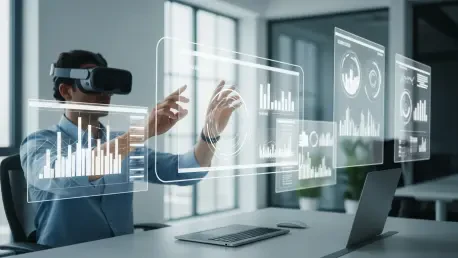

The rapid maturation of immersive technology over the last few years has effectively erased the line between niche gaming peripherals and essential computational tools for the modern workforce. While the early days of head-mounted displays were characterized by bulky wires and limited software libraries, the landscape in 2026 presents a highly sophisticated ecosystem where “spatial computing” has become the standard terminology for a new generation of mixed reality hardware. This transformation is not merely a technical upgrade but a fundamental shift in how digital information is integrated into physical environments, allowing users to interact with high-fidelity 3D assets, multi-monitor virtual workstations, and hyper-realistic social simulations with unprecedented ease. As we navigate the current market, the distinction between virtual reality and augmented reality has largely collapsed into a singular mixed-reality experience, driven by advancements in optics and mobile processing power that were once thought to be a decade away. Consequently, the criteria for evaluating these devices have shifted from simple frame rates and resolutions to more complex metrics such as perceptual comfort, passthrough latency, and the intuitiveness of gesture-based operating systems.
The Dominance of Standalone Hardware: Meta’s Strategic Market Control
The current market landscape is undeniably defined by the ubiquity of standalone hardware, a trend that has solidified as manufacturers successfully decoupled high-end experiences from expensive external computers. Meta continues to hold the largest share of this market by employing a tiered product strategy that caters to both performance-seeking enthusiasts and the broader consumer base looking for an accessible entry point. The flagship of this approach remains a balanced, all-in-one system that utilizes high-performance pancake lenses and the latest mobile processing architecture to deliver crisp, high-resolution visuals without the need for a tether. By focusing on high-quality color passthrough, this hardware has enabled a robust library of mixed reality applications that blend digital objects into the user’s actual room. However, even with these advancements, the industry still grapples with the inherent limitations of mobile battery technology, leading many professional users to rely on external power banks for extended productivity sessions or long-form media consumption.
For those prioritizing value over maximum optical clarity, the introduction of streamlined models has democratized access to the wider ecosystem of spatial applications and social platforms. These entry-level devices retain the core processing capabilities of their more expensive siblings, ensuring that the latest software and mixed reality features remain functional across the entire product lineup. While these more affordable units may utilize slightly older display technologies or less precise tracking sensors for controllers, they provide a comprehensive gateway for millions of new users to explore the vast array of available content. The success of this model has forced competitors to rethink their pricing structures, as the accessibility of these devices has turned immersive technology into a common household item rather than a luxury for the tech-savvy. This expansion of the user base has also spurred a surge in developer interest, resulting in a diverse marketplace of software that ranges from advanced fitness applications to collaborative enterprise tools that are now fundamental to remote work culture.
The Evolution of Spatial Computing: Apple’s High-End Influence
A major paradigm shift has occurred with the rise of spatial computing as a distinct category, largely driven by the high-fidelity standards introduced in the latest iterations of wearable computers. The current benchmark for this category is represented by devices that prioritize visual transparency and extreme pixel density, effectively making the digital interface indistinguishable from physical reality. By moving away from traditional hand controllers in favor of advanced eye-tracking and gesture recognition, these premium systems have created a more natural interaction model that appeals to professionals who require a seamless transition between their physical desk and their virtual workspace. The latest M-series processing units integrated into these headsets have significantly reduced the weight and heat output of the hardware, addressing one of the primary complaints regarding long-term wearability while maintaining the ability to render complex 3D environments and high-resolution video windows simultaneously.
Despite the significant price barrier associated with these top-tier spatial computers, their influence on the broader industry is profound, as they set the standard for what a professional-grade user interface should look and feel like. The emphasis on ergonomics in 2026 has led to the development of better weight distribution systems and breathable facial interfaces, making it possible for users to wear these devices for several hours during a standard workday. This focus on the “prosumer” market has established a clear ceiling for the industry, pushing other manufacturers to innovate in areas such as foveated rendering and high-dynamic-range displays. While these high-end devices remain out of reach for the casual consumer, they serve as a critical laboratory for new technologies that eventually trickle down to more affordable hardware. The result is an industry that is no longer satisfied with “good enough” immersion, as the expectation for crystalline clarity and intuitive, controller-free operation has become the new baseline for any device claiming to offer a premium experience.
The Android Ecosystem and the Competitive Response from Samsung
The landscape of 2026 has also seen a significant resurgence in the Android ecosystem with the launch of standardized spatial computing platforms that offer a direct alternative to closed-loop systems. Samsung’s recent entry into the high-end mixed reality space has provided a template for other manufacturers, utilizing a unified operating system that integrates seamlessly with existing smartphone and tablet environments. This development is crucial because it allows for a more open software market, where developers can create applications that run across a wide variety of hardware without needing to rebuild their code for every individual headset. By focusing on high-resolution passthrough and a robust set of productivity tools, these devices appeal to users who are already integrated into the Samsung or Google service architectures. This competitive pressure has accelerated the adoption of cross-platform standards, ensuring that high-quality immersive experiences are not locked behind a single brand’s ecosystem.
The significance of this Android-based movement lies in its ability to offer a “middle ground” that provides high-end features like eye tracking and spatial audio without the extreme costs associated with the most expensive luxury brands. By leveraging their existing manufacturing chains for displays and mobile chips, these companies can bring high-performance hardware to market more efficiently than newcomers. This has led to a diversification of the market, where users can choose from a variety of form factors, including some that prioritize outdoor visibility and others that focus on maximum immersion for home theater use. The competition between the major tech giants has moved beyond simple hardware specs and into the realm of ecosystem utility, where the value of a headset is measured by how well it interacts with the rest of a user’s digital life. As a result, the current market is more vibrant and competitive than ever, with a steady stream of updates and new features that keep the hardware relevant for years rather than months.
Specialized Performance: The Role of Tethered and Console VR
While standalone systems have captured the majority of the market, there remains a dedicated segment of the population that demands the raw graphical power only possible through a wired connection to a powerful local computer or game console. These tethered systems continue to thrive among hardcore gamers and industrial professionals who require the highest possible frame rates and zero-latency input for complex simulations. In 2026, the leading tethered headsets utilize ultra-high-resolution OLED displays that offer deep blacks and vibrant colors that mobile processors still struggle to replicate at high refresh rates. For users who spend their time in flight simulators, high-fidelity racing games, or advanced medical training environments, the inconvenience of a cable is a small price to pay for the level of visual detail and tracking precision these units provide. This niche remains vital to the industry, as it pushes the boundaries of what is possible in terms of pure graphical fidelity and haptic feedback.
Sony’s continued support for console-integrated virtual reality has also maintained a unique position in the market, offering a high-end experience that is significantly easier to set up than a traditional PC-based system. By utilizing the specific hardware capabilities of the PlayStation 5, this headset offers features like headset haptics and eye-tracked foveated rendering that allow it to punch well above its weight class in terms of performance. Although the lack of backward compatibility with older generations initially posed a challenge, the current library of dedicated titles and the integration of high-end cinematic modes have made it a favorite for gamers looking for a premium experience without the complexity of PC maintenance. Meanwhile, long-standing PC-VR champions like Valve continue to influence the market with their commitment to precision tracking and open platforms, even as the industry shifts toward hybrid models that can function both as standalone units and high-performance tethered displays for the most demanding tasks.
The Divergence of Form Factors: Smart Glasses and Lightweight AR
One of the most notable trends of 2026 is the split between fully immersive headsets and lightweight smart glasses that prioritize portability and social acceptability over total environmental replacement. These devices, often categorized as “lite” immersion tools, utilize prism-based projectors or waveguide technology to cast digital information into the user’s field of view while maintaining the appearance of standard eyewear. For travelers and professionals who work in public spaces, these glasses provide a massive virtual screen for private media consumption or multi-monitor workflows without the bulk of a traditional headset. They represent a significant shift toward the daily utility of wearable tech, focusing on providing a “private theater” experience or simple information overlays like navigation and notifications. While they do not offer the full spatial interaction of a high-end mixed reality headset, their ease of use and comfort have made them an increasingly popular choice for the general public.
However, the consensus among experts is that waveguide technology, while promising, is still navigating its early stages of widespread adoption. Many current models are limited by smaller fields of view or monochrome displays that struggle in bright outdoor environments, which restricts their utility for complex augmented reality tasks. Despite these hurdles, the progress made by companies like Meta and various specialized optics firms has led to the creation of glasses that are nearly indistinguishable from regular fashion eyewear. These devices are increasingly being used as assistants, leveraging onboard cameras and AI to identify objects, translate text in real-time, and provide context-aware information directly to the wearer. This category represents the eventual goal of the industry: a device that can be worn all day, providing digital enhancement to the physical world without the social or physical barriers of a large face-mounted computer. As optics continue to improve, the gap between the capabilities of these glasses and full-scale headsets is expected to close, though they currently remain distinct tools for different use cases.
Key Paradigms: The Convergence of Reality and Ergonomics
The state of the industry in 2026 is characterized by the complete convergence of virtual and augmented reality into a unified mixed reality experience. The era of “pure VR” where a user was completely blinded to their physical surroundings has largely ended, as even the most gaming-centric headsets now include high-quality passthrough cameras for safety and environmental awareness. This has fundamentally changed how software is designed, with an emphasis on “world-aware” applications that can recognize furniture, walls, and other people in the room to integrate them into the digital experience. This shift has made the technology far more approachable for the average person, as the fear of isolation or physical injury while wearing a headset has been greatly mitigated by the ability to see the world around them at any time. Moreover, the move toward gesture-based control and eye tracking has made the technology more inclusive, allowing individuals who may find traditional game controllers intimidating to interact with digital content naturally.
Furthermore, technical specifications like resolution and field of view have started to take a backseat to the physical experience of wearing the hardware. In 2026, the success of a device is measured more by its weight distribution, heat management, and the quality of its head strap than by its raw processing speed alone. Manufacturers have realized that even the most powerful computer is useless if it causes neck strain or facial fatigue after thirty minutes of use. This focus on human-centric design has led to the adoption of new materials, such as lightweight magnesium alloys and moisture-wicking fabrics, that make high-end headsets much more comfortable for extended professional use. As the industry moves forward, the focus is likely to remain on refining these physical attributes while continuing to shrink the electronics, with the ultimate goal of making spatial computing as comfortable and unobtrusive as a pair of high-quality headphones or standard prescription glasses.
Strategic Buying Advice and Industry Trajectory
For individuals and organizations looking to invest in immersive technology today, the choice depends heavily on the specific balance required between portability and raw performance. The most logical recommendation for the vast majority of consumers remains a high-quality standalone system, as these devices offer the best mix of features, ease of use, and a robust library of existing content. Specifically, the general-purpose flagship models currently provide the most versatile experience for gaming, fitness, and light productivity. Those on a strict budget should look toward the streamlined entry-level units, which offer the same core capabilities and social features at a fraction of the cost, making them ideal for families or students. Meanwhile, the high-end spatial computing market is best suited for professionals and media enthusiasts who can justify the premium price for the sake of extreme visual clarity and a more refined, controller-free operating environment.
Looking back at the progress made leading up to this point, the industry successfully navigated the transition from a specialized hobby to a legitimate computational platform. The hardware of 2026 demonstrated that the “killer app” for these devices was not a single game or program, but the ability to provide a more flexible and expansive way to interact with all forms of digital information. Companies have effectively addressed the primary barriers of motion sickness and low resolution, replacing them with intuitive interfaces and comfortable designs that support daily use. While the dream of a single device that is as thin as glasses but as powerful as a desktop computer remains a work in progress, the current offerings represent a high level of maturity. The market has moved beyond the hype cycle and into a phase of steady, meaningful improvement, where spatial computing has finally earned its place alongside the smartphone and the laptop as a primary tool for modern life.