
Faster wired charging now allows the battery to reach a 50 percent charge in just 15 minutes when paired with a compatible 60W power adapter purchased separately. This development signifies a major shift in Apple’s approach to the iPhone 18 Pro Max, which now finds itself in a unique position within the company’s hardware hierarchy. While the “Pro Max” moniker once denoted the absolute pinnacle of Apple’s innovative efforts, the landscape of 2026 has been reshaped by the debut of the iPhone Duo, Apple’s first commercially available foldable device. This evolution has effectively reclassified the iPhone 18 Pro Max as the premium choice for “conservative” users who demand extreme performance and expansive screen real estate without the structural compromises sometimes inherent in folding screens. It is a year defined by consolidation, where physical refinement meets significant leaps in internal architecture. Despite being arguably overshadowed by the novelty of the Duo, the 18 Pro Max remains a formidable powerhouse, though its launch is tempered by an international memory crisis that has pushed entry-level pricing to unprecedented levels for a standard bar-style smartphone.
Refined Design: Aesthetics and Physical Presence
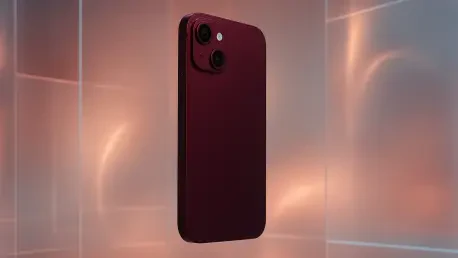
In terms of visual identity, the iPhone 18 Pro Max adheres strictly to the sophisticated design language established by its immediate predecessor, utilizing a robust construction of aluminum and high-durability glass. The primary aesthetic update for 2026 is the introduction of the “Burgundy” colorway, a deep, matte finish that provides a refined alternative to the more experimental colors of previous generations. Other available options include Glacier, silver, and black, ensuring a professional and premium appearance remains consistent across the entire flagship lineup. The device remains a substantial piece of hardware, weighing in at 249 grams and maintaining a massive 6.9-inch footprint that commands attention. This substantial weight, while contributing to a sense of luxury and build quality, results in a “chunky” profile that may prove challenging for individuals with smaller hands or those who prefer one-handed operation.
While the overall build quality is exceptional, certain design choices have invited critical scrutiny regarding daily ergonomics and wear. The sharp edges surrounding the rear camera plateau are particularly noteworthy, as they tend to bear the brunt of contact when the device is placed on hard surfaces, making them susceptible to minor scuffs if the phone is not immediately secured in a protective case. However, on the front, the user experience has been subtly enhanced through the refinement of the Dynamic Island. By utilizing a smaller Face ID sensor cutout, Apple has managed to reclaim valuable screen real estate, allowing the software interface to simultaneously display three “Live Activities” rather than the previous limit of two. This change allows for better multitasking, such as monitoring a timer, navigation prompts, and a music player all at once without cluttering the status bar, demonstrating a commitment to maximizing the utility of the traditional screen layout.
Visual Excellence: The Boundaries of Display Technology
The 6.9-inch ProMotion OLED panel on the iPhone 18 Pro Max is widely considered the current industry standard for visual fidelity, showing no significant weaknesses in performance. With a resolution of 1,320 x 2,868 pixels and a density of 460 pixels per inch, the display delivers incredibly sharp text and vivid imagery that remains crisp even upon close inspection. The most impressive technical feat of this screen is its peak brightness of 3,000 nits, which is primarily engineered to ensure that HDR content and navigation tools remain perfectly visible even in the harshest, direct outdoor sunlight. Laboratory testing has verified these claims, showing the display capable of maintaining extreme brightness levels without significant color shifting or thermal throttling, a feat that sets it apart from many competitors who struggle with sustained high-nit output in warm environments.
Color accuracy is another area where the iPhone 18 Pro Max excels, achieving a near-perfect Delta E score that essentially renders inaccuracies imperceptible to the human eye. This precision makes the device an essential tool for digital creators, photographers, and videographers who require a reliable mobile reference for color grading and editing. Whether the user is viewing dark, moody cinematic content with complex shadow detail or vibrant, high-contrast graphics, the OLED panel balances deep blacks and bright highlights with exceptional grace. The consistency of the 120Hz ProMotion refresh rate further enhances this experience, providing fluid scrolling and responsive touch inputs that make the interface feel incredibly reactive. This display does not just serve as a window into the digital world; it acts as a high-performance monitor that satisfies the demands of both professional workflows and high-end entertainment.
The A20 Pro Architecture: A 2nm Performance Milestone
At the core of the iPhone 18 Pro Max lies the A20 Pro processor, a milestone in semiconductor engineering built on TSMC’s cutting-edge 2nm manufacturing process. This transition to a smaller node is the most significant architectural change in several generations, allowing for a much higher transistor density within the same physical space. This density translates directly into substantial performance gains while simultaneously reducing energy consumption, as electrons have shorter distances to travel within the chip. Benchmarking results have confirmed the potency of this new architecture, with multi-core CPU performance jumping by 28 percent over the previous year. Even more impressive is the Vulkan GPU performance, which has seen a massive 39 percent improvement, enabling mobile gaming and graphical rendering capabilities that were previously reserved for dedicated desktop or console hardware.
While the average user may not immediately exhaust this level of raw power, the surplus performance is a strategic inclusion that ensures the device remains fluid and capable for many years. This overhead makes the 18 Pro Max an ideal candidate for long-term ownership, as it is well-equipped to handle the increasingly demanding software updates and AI-driven applications of the late 2020s. Furthermore, the internal thermal management system has been overhauled to support this power, featuring a larger and more efficient vapor chamber. This hardware improvement allows the A20 Pro to maintain high clock speeds during extended sessions of intense gaming or 4K video rendering without the aggressive throttling that plagued older models. By prioritizing both peak performance and thermal stability, Apple has created a device that functions as a portable workstation capable of sustaining heavy workloads without external cooling.
Energy Efficiency: Battery Performance and Power Delivery
Battery performance has received a measurable boost, largely attributable to the efficiency of the 2nm A20 Pro chip rather than a massive increase in physical battery size. Official claims suggest up to 43 hours of local video playback, and independent testing has largely backed this up, showing nearly 40 hours of continuous use under controlled conditions. For the typical heavy user, this translates to roughly two full days of moderate activity on a single charge, providing a level of reliability that has become a hallmark of the Pro Max series. This longevity is particularly important as mobile applications become more resource-intensive, requiring a power source that can withstand constant connectivity and high-brightness display usage. The 18 Pro Max effectively eliminates “range anxiety” for the vast majority of consumers, solidifying its reputation as a dependable workhorse.
Beyond mere capacity, Apple has also made strides in addressing charging speeds, a category where it has historically lagged behind some international competitors. When the device is paired with a 60W or higher power adapter, it can now reach a 50 percent charge in just 15 minutes, offering a significant improvement for users who need a quick top-up during a short break. While this does not match the extreme triple-digit charging wattages seen in some boutique Android flagships, it represents a balanced approach that prioritizes battery health and longevity over raw speed. However, it remains a point of contention for some that the high-speed charging brick is not included in the box, requiring an additional investment to unlock the device’s full power potential. This strategic decision places the burden of cost on the consumer, yet the convenience of rapid power delivery is a substantial upgrade for the modern mobile lifestyle.
Siri AI: The Integration of Intelligence and iOS 27
The software landscape of 2026 is dominated by the maturation of “Siri AI” within the iOS 27 ecosystem. Leveraging advanced large language models and integration with Google Gemini, this version of Siri provides a significantly more sophisticated and conversational user experience. One of the standout features is its “on-screen awareness,” which allows the assistant to understand and interact with the specific context of what a user is viewing at any given moment. If a user is looking at a complex technical document or a set of travel photos, Siri can answer specific questions about the content, provide summaries, or even cross-reference that information with the user’s emails and calendar. This deep level of integration aims to transform the voice assistant from a simple command-response tool into a proactive digital companion that understands the user’s personal digital history.
Despite these clear technological advancements, the AI experience on the iPhone 18 Pro Max is not without its frustrations. The transition to a fully AI-driven interface remains a work in progress, with Siri still occasionally resorting to generic “I don’t understand” responses when faced with multi-step or highly specific requests. There is also a noticeable lack of synergy between Siri and some of the more advanced features of the Apple Intelligence-powered Shortcuts app; while the software can help a user build complex automation workflows using natural language, the voice assistant sometimes fails to execute those very same workflows reliably. This suggests that while the foundation for a truly intelligent ecosystem has been laid, the refinement process will likely continue through the 2026 to 2028 software cycles. For now, Siri AI is a powerful tool for information retrieval and simple tasks, but it has not yet achieved the seamless perfection promised by early promotional materials.
Professional Imaging: The Variable Aperture Revolution
The primary highlight of the iPhone 18 Pro Max camera system is the introduction of a variable aperture on the 48MP main wide-angle lens. This mechanical iris can shift between f/1.48 and f/4, providing a level of optical control that was previously the exclusive domain of dedicated DSLR or mirrorless cameras. In low-light environments, the wide f/1.48 setting maximizes light intake and produces a natural, creamy background blur for portraiture that is optically superior to any software-generated effect. Conversely, when shooting landscapes or architecture in bright daylight, the iris can stop down to f/2.8 or f/4 to increase the depth of field, ensuring that both foreground elements and distant horizons remain tack-sharp. This mechanical versatility gives photographers unprecedented creative flexibility, allowing them to manipulate light and focus without relying solely on post-processing algorithms.
Supporting the main sensor are a 48MP ultrawide camera with a 120-degree field of view and a 48MP 4x optical telephoto lens. While the hardware provides excellent clarity across all focal lengths, Apple’s marketing of an “8x optical-quality” zoom is somewhat misleading, as it relies on a digital crop of the primary sensor rather than a dedicated secondary telephoto lens. Nevertheless, the image quality remains the gold standard for mobile devices, particularly in the realm of video. The 18 Pro Max supports 4K Dolby Vision at 60fps and ProRes video in Log 2 color profiles, which can be recorded directly to external SSDs via the high-speed USB-C port. This capability has solidified the device’s position as the preferred choice for mobile journalists and independent filmmakers who require professional-grade footage from a device that fits in their pocket. While it cannot fully replace a full-frame sensor, it narrows the gap significantly for most professional applications.
Economic Factors: The Global Memory Crisis and Pricing
One of the most significant challenges facing potential buyers of the iPhone 18 Pro Max is its steep price point, which has been heavily influenced by a global memory shortage and rising component costs. Because of these macroeconomic factors, the device is notably more expensive than previous flagship models across every storage tier. The entry-level 256GB model now starts at £1,299, while the top-tier 2TB version reaches nearly £2,500. This pricing structure has fundamentally changed the value proposition of the device, transforming it from a standard premium upgrade into a significant capital investment. For many consumers, these prices necessitate a more careful consideration of their actual storage needs and the expected lifespan of the device, as the cost of entry is now higher than that of many professional-grade laptops.
This shift in pricing has also made storage management a critical skill for the modern user. Those who do not wish to pay the massive premium for 1TB or 2TB models must rely more heavily on cloud services or external storage solutions, especially given the large file sizes generated by the 48MP camera system and ProRes video recording. While the high resale value of iPhones and Apple’s commitment to long-term software support help to mitigate the initial cost, the 18 Pro Max is undeniably positioned as a luxury tool. The global memory crisis has essentially forced Apple to pass production costs directly to the consumer, making the flagship bar phone a symbol of the increasing cost of high-end mobile technology. For the dedicated enthusiast, the performance may justify the price, but for the average user, the economic barrier is more formidable than ever.
Market Dynamics: Facing a Diversified Competition
In the highly competitive market of 2026, the iPhone 18 Pro Max must defend its position against a range of high-end Android rivals that offer aggressive hardware features at often lower price points. The Samsung Galaxy S26 Ultra remains a primary competitor, offering the integrated S-Pen and a more versatile telephoto zoom range for a lower overall cost. Meanwhile, international manufacturers like Xiaomi and Oppo have pushed the boundaries of camera hardware even further; the Xiaomi 17 Ultra features a massive 1-inch main sensor that provides superior light gathering, while the Oppo Find X9 Ultra is frequently praised for its 10x optical telephoto capabilities. These devices represent a significant challenge for Apple, as they often introduce “world-first” hardware specs months before they appear in the iPhone lineup, appealing to users who prioritize bleeding-edge specifications over ecosystem integration.
Google also remains a formidable player with the Pixel 11 Pro XL, which focuses heavily on a software-first experience and AI-driven photography. While the Pixel generally lags behind the iPhone in terms of raw processing power and battery longevity, its integrated AI features are often perceived as more intuitive and less restrictive than Apple’s current implementation. For consumers who are not strictly tied to the iOS ecosystem, these Android flagships provide compelling reasons to switch, particularly when considering the significant price savings offered by models like the Pixel or the S26 Ultra. However, the iPhone 18 Pro Max maintains its lead through superior build quality, a more polished app ecosystem, and the sheer power of the A20 Pro chip. It is a battle between raw hardware innovation from the Android camp and the refined, high-performance stability that Apple has perfected over the last several years.
Strategic Outlook: The Legacy of the Bar Phone
The iPhone 18 Pro Max represented a significant moment in the history of mobile computing, serving as the bridge between traditional smartphone design and the AI-integrated future. Throughout its lifecycle, the device proved that there was still immense value in the standard “bar” form factor, even as foldable technology began to capture the public imagination. By focusing on the core pillars of battery life, processing power, and display quality, Apple ensured that the 18 Pro Max remained the definitive choice for users who required a reliable, high-performance tool for professional and personal use. The introduction of the variable aperture lens and the record-breaking 2nm architecture set a new benchmark for what a traditional flagship could achieve, successfully justifying its position in a market that was increasingly distracted by folding screens and experimental designs.
For users considering their next move in the 2026 and 2027 market, the actionable takeaway was clear: the iPhone 18 Pro Max was the safest and most powerful investment for those who prioritized longevity and reliability over novelty. While the high entry price and the “chunky” ergonomics remained valid points of consideration, the device’s ability to handle the most demanding tasks of the late 2020s ensured it would not become obsolete quickly. Future developments in the 19 and 20 series will likely build on the 2nm foundation established here, moving toward even deeper AI integration and perhaps more compact internal components. For now, those who chose the 18 Pro Max secured a piece of hardware that perfected the traditional smartphone experience, providing a stable platform for the rapidly evolving digital world. Its success demonstrated that while the form factor may eventually change, the demand for uncompromising performance and build quality remains constant.